Historic Oregon Marine Reserves Bill Clears Oregon House Unanimously
The Oregon House of Representatives approved HB-3013 A on Thursday, outlining a detailed plan and timeline to complete evaluation of six potential marine reserve sites recommended by the Governor’s Ocean Policy Advisory Council.
Salem--The
Oregon House of Representatives approved HB-3013 A on Thursday, outlining a
detailed plan and timeline to complete evaluation of six potential marine
reserve sites recommended by the Governor’s Ocean Policy Advisory Council. In
addition, the bill establishes two pilot marine reserve projects at Otter Rock
near Depoe
Bay and Redfish Rocks near
Port Orford and prescribes a process to evaluate the potential for reserves in
four other areas of the coast. The vote was 51-0.
"It was great to find
an Oregon solution to a distinct Oregon problem. When
people get together, talk openly and hammer out difficult issues, better
solutions tend to come about. I am truly excited about the House Bill 3013 and
its potential for the future of Oregon,” said
Representative Arnie Roblan (D-Coos Bay) who carried the bill on the Floor
today.
“This bill reflects an incredible amount of work from a diverse
group of stakeholders, who put aside their differences to agree on a process
that Oregon can be proud of; as we move forward
the Coastal Legislators will ensure the concerns of our coastal communities are
addressed” said Representative Wayne Krieger (R-Gold Beach).
HB-3013 A passed
unanimously out of the House Committee on Rules boasting bi-partisan support.
The bill outlines a balanced and diverse procedure for the planning of
Oregon’s new marine reserves, including the
development of regional community groups that will assist with the shaping of
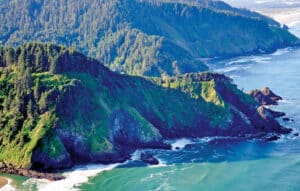
potential marine reserve sites: Cape
Falcon north of Manzanita, Cascade Head
north of Lincoln City, Cape
Perpetua south of Yachats and Cape
Arago-Seven Devils south of Coos Bay.
“We applaud the legislature
for having the foresight to see marine reserves as an investment in sustainable
ocean management,” said Susan Allen, of the Pew Environment Group, who directs
the Our Ocean coalition. “This bill provides a common sense approach using the
best available science. Ultimately it will better ensure our state’s ocean
health by preserving underwater areas where marine plants and animals can
thrive.”
“Oregon’s marine reserve debate has been long
and often contentious. The collaborative effort exemplified in HB 3013A should
be the model for future dialogue if we want the outcomes to truly represent the
best interests of the many stakeholders involved,” said Nick Furman, Executive
Director of the Dungeness Crab Commission. “We look forward to working with the
state’s fisheries managers as they take on the tasks outlined for them in this
piece of legislation and as responsible stewards of our territorial seas, offer
our support as this process moves forward.”
“When we have problems and
issues on the coast – whether it’s the severe storms or the debate over marine
reserves – the Oregon Solutions approach brings neighborhood people together to
find common ground,” said State Rep. Brad Witt (D-Clatskanie). “That’s just what
we did with this bill.”
State Rep. Jean Cowan echoed her praise for the
collaborative effort.
"I'm excited to be able to put the force of state
law behind the OPAC recommendations and to begin the next steps in the ongoing
development of a practical series of marine reserve designations," said Cowan
(D-Newport).
HB-3013 A will implement the recommendations of the Ocean
Policy Advisory Council (OPAC). Last fall OPAC reviewed 20 site proposals for
marine reserves and protected areas that clustered around nine ecologically
significant areas of the coast. OPAC recommended that six go forward for further
evaluation and potential implementation.
“This bill gives us the
opportunity for baseline data that will help us craft further study in this
unchartered area, providing us with the science to make good policy decisions,”
said State Rep. Deborah Boone (D-Canon Beach).
“Allowing fishing interests
and coastal communities a role in helping identify limited areas of the coast
for further research on marine reserves is a positive development for Oregon,” said Frank
Warrens, a charter boat fisherman who served as Chair of the Marine Reserves
Working Group of OPAC. “This bill helps ensure Oregon’s potential designation of marine
reserves is scientifically based, locally supported and sensitive to
recreational and commercial fisheries critical to our coastal
economy.”
The Governor and the Co-Chairs of Ways and Means Committee have
included this bi-partisan bill in each of their budgets, identifying surplus
settlement funds to be used from the grounding of the New Carissa cargo ship.
Sponsors and supporters agree that funds generated from an oil spill settlement
should be used for marine science and conservation.
The bill now moves to
the Oregon Senate for consideration.
To find out more about Oregon’s process to
establish marine reserves go to www.oregonmarinereserves.net <http://www.oregonmarinereserves.net/>