Personal tools

Skip to content. | Skip to navigation

Sections
You are here: Home Pressroom Press Clips Migratory birds from all over refuel in Oaks Bottom

Migratory birds from all over refuel in Oaks Bottom

By Merry MacKinnon
The Bee

Heartbreaking images of oil-drenched pelicans along the Gulf of Mexico, from the current oil spill disaster there, have many people in Southeast Portland wondering if there is anything that they can do to help save the birds

Heartbreaking images of oil-drenched pelicans along the Gulf of Mexico, from the current oil spill disaster there, have many people in Southeast Portland wondering if there is anything that they can do to help save the birds.

Some might volunteer. The Audubon Society of Portland’s Internet website (www.audubonportland.org/news/gulf) includes information if you’d like to help with the disaster in whatever way is useful.

But, volunteering to go to the Gulf states, where the worst oil spill disaster in U.S. history continues its relentless onslaught, is more difficult than it might seem, cautions Audubon Portland Urban Wildlife Specialist Karen Munday.

“They’re really trying to use local volunteers right now,” Munday explains. Yet, the urgency is compelling. It’s not only pelicans that are dying. Millions of migratory birds are also at risk of being sickened as they fly to nesting places in northern Canada from Latin America and stop off in coastal Louisiana to rest and eat.

Because birds traveling through here also sometimes travel through there, Munday cites steps people here can take to try and protect birds whose migratory path from Central America over the West Coast to Alaska includes a stop-off for resting and eating in Portland.

Oaks Bottom is one of those resting places. “At least 100 species of birds use Oaks Bottom,” says Audubon Portland Conservation Director Bob Sallinger. He will visit the Gulf Coast in August, Sallingers says, to look at what’s happened, and to bring lessons back to Oregon.

Here in Southeast, Oaks Bottom is a sanctuary for birds — but the birds still face hazards. One is habitat loss through species invasion — such as ivy, reed canary grass, purple loosestrife, and Himalayan blackberries.

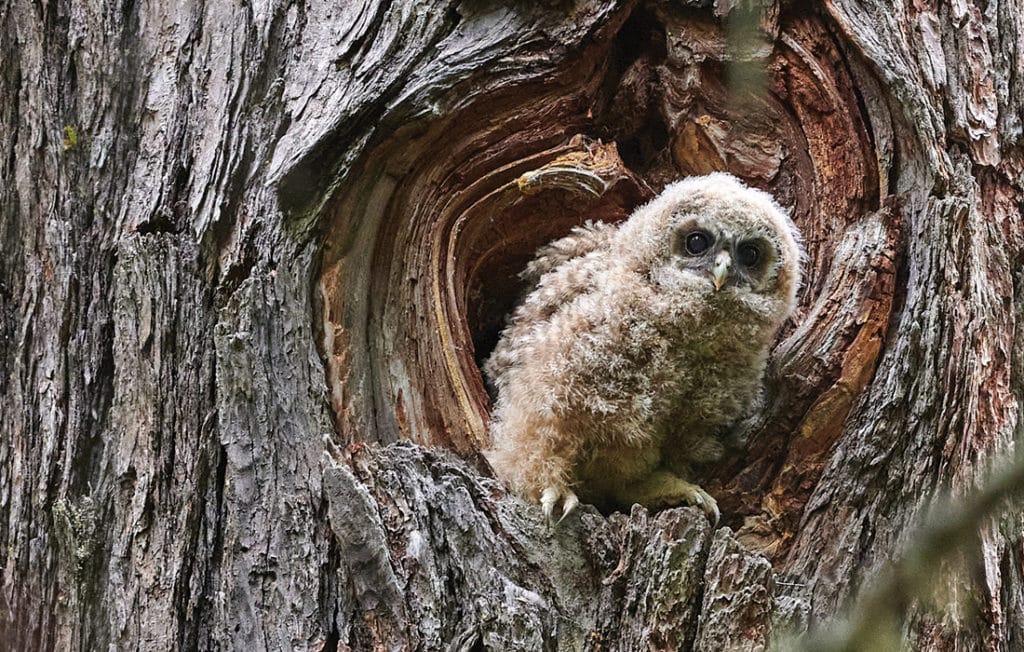
Dogs that disturb birds trying to rest are another hazard, Sallinger adds, as are well- intentioned humans who mistakenly assume that a fledgling huddled in the grass is abandoned — and pick it up and take it home. “From the robin to the screech owl, most fledglings spend do time on the ground,” he observes.

In addition, birds bio-accumulate contaminants that seep from contaminated spots on the Willamette River; Portland Harbor, a superfund site, Sallinger is contaminated with PCBs, and the insecticides dieldren and DDT. “DDT was banned in 1972, but it lasts for a long time,” Sallinger says. “And it's still causing eggshell thinning in peregrine falcon nests.”

Added to all those hazards, Sallinger says, is that a lot of birds that migrate along the Willamette River are adversely impacted by increasing urbanization.

And that's where individual efforts on private land can make a difference, Munday chimes in: “It’s important to protect publicly-owned urban green spaces, but birds also go to private property for resting, refueling, and watering.”

Residents can help by removing invasive species and planting native flora in their yards, as Kathleen McCann did when she first moved into her Woodstock house decades ago.

“It was a very plain vanilla yard,” recalls McCann. Nowadays her yard features a native hemlock, pines, cedars, Douglas firs and salal, snowberries, and other native shrubs, which provide berries that birds like to eat. And these days McCann’s yard is visited by Western tanagers, golden-crowned sparrows, rufus-sided towhees, juncoes and hummingbirds. “The birds like the currants, the kinnikinnick berries, the salal berries and the snowberries, and they love the Indian plum,” McCann smiles.

In the meantime, a healthy Oaks Bottom also depends on the water quality of the Willamette River. “Look at the Willamette; it's a shipping channel,” Munday points out. “It could be vulnerable to a spill.”

Still, whether they have a yard or not, each Southeast Portland resident can help preserve birds and other wildlife in some way. “Even someone just changing their oil in their car can make sure they dispose of that oil properly,” says Munday.
Read the original story
Document Actions
powered by Plone | site by Groundwire and served with clean energy