Portland's tall, glass structures can be deadly to birds
By day, reflections of clouds and trees are confusing; by night, lights can throw off navigation
For
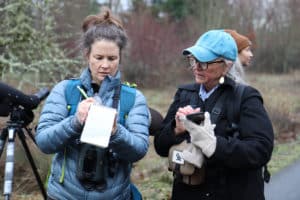
six weeks near dawn, about two dozen volunteers with clipboards and
small collection bags trekked around many of Portland's newest and
tallest buildings, occasionally scooping up dead and injured birds.
Why?
The city's glassy high-rises and well-lit buildings come at a cost to
the area's birds, which can smash into windows and glass doorways during
the night, Audubon Society of Portland officials say.
"Although
the numbers weren't high, we found that it's not just pigeons and
sparrows that are colliding with buildings, but native and migrating
birds as well," said Mary Coolidge, project director with the Audubon
Society of Portland.
National estimates by Audubon place the numbers of birds killed by window strikes in the millions each year.
The
Portland survey discovered 14, including songbirds, woodpeckers,
red-breasted sapsuckers and a Cooper's hawk. That count, however, is
misleading, Coolidge said.
"Unfortunately, many areas we wanted
to search were on private property or inaccessible from the street," she
said. "At least 41 of the 44 buildings had obstacles, including
terraces, balconies and gated areas."
Audubon's Wildlife Care Center takes in an additional 200 to 300 birds injured in window strikes each year.
Wildlife
experts believe that collisions occur during the day when birds confuse
cloud and tree reflections in glass for the real things. And at night,
when migrating birds are on the move, some lose their celestial
navigation landmarks in brightly illuminated buildings, then circle for
hours until they are exhausted and tumble from the sky.
Dead birds are likely eaten by scavengers, while badly injured ones often fly off to die, they said.
The Portland study, funded by an Oregon Zoo
grant, is the first of its kind in Oregon. Volunteers focused on The
Ardea, Eliot Tower, Regal Fox Tower 10, Indigo 12 West, KOIN Center, The
Meriwether, Riva on the Park, Ladd, US Bancorp Tower, Wells Fargo
Center and Lewis and Clark College.
Kathryn Menard, a volunteer
at the care center, spent several mornings searching sidewalks and
gardens around the gleaming South Waterfront towers.
Although she didn't find any carcasses, she enlisted several maintenance workers to assist with future counts.
"Even if I didn't find any dead birds, I want to do whatever I can to make this a bird-friendly city," Menard said.
Armed
with the data, some conservationists are preparing to lobby city
leaders to join Chicago, Minneapolis, San Francisco, Boston, Toronto,
and Tallahassee in launching a Lights Out campaign to cut down on light
pollution that attracts birds.
James Benya, an international lighting designer from West Linn, wants to lend his expertise.
"We've been working on a model ordinance that's simple and can be used just about anywhere," said Benya, a board member with International Dark-Sky Association,
a group advocating for less nighttime illumination of buildings,
streets and parking lots. "It basically calls on building owners to turn
off all unnecessary lights and to shield outdoor lighting -- including
signs and street lamps -- from pointing into the sky."
, was impressed with the study but recommended additional surveys before drawing any conclusions.
The group "might have started too early to catch the migrants that are just starting to come through," Hennings said. "I'd like to see a more in-depth study that includes maintenance personnel along with building tenants who might have their own experiences to report."
In the next few months, Coolidge will present her findings to city planners and architects in an effort to start bird-safe zones throughout the city.
For now, she would like to see building owners and tenants begin adding decals, screens or streamers to exposed glass, closing blinds at night, and moving bird feeders closer to windows.
In the long run, she would like architects and planning officials to design buildings that remain aesthetically pleasing but less dangerous for birds.
--Joe Fitzgibbon, Special to The Oregonian